
By Steve
After four long years, another World Cup is finally here. And when opening kickoff between Qatar and Ecuador occurs (roughly 10 AM CT on Sunday morning), the wait will finally be over.
If you’re like me, you may be saying to yourself, “But Steve, I’m American. I don’t like soccer!” I hear you. I really do. If that’s the case, read the rest of this article for some good reasons to watch, regardless of your level of fandom. It’s four weeks of competition and so far, Twitter hasn’t gone anywhere. Come be a part of the discourse.
1) For the Passionate Football Fan
You know who you are. The person who calls the sport football over soccer. The person who is up at 5 AM every Saturday morning to watch their favorite European Premier League team. The person who goes out of their way to get the vocabulary right: the field is a pitch, the coach is a manager, a successful chip shot isn’t beautiful, but cheeky. You hate Ted Lasso, because, and I quote, “No European team would ever hire an American football coach to be their manager.”
Well, this article isn’t for you. You’re going to watch the tournament and you’re going to annoy whoever is watching with you. Own that. Go and live your best life, imaginary American soccer fan. You’re a rare breed here.
2) For the Casual, Every Four Years Fan
I comfortably fall into this category. I imagine most of you fall into this category. I may follow the occasional significant soccer-related story, but for the most part, I only care about the World Cup, follow it every four years, and chant “USA! USA! USA!” in my sleep during that entire month.
My first fanboy exposure to the World Cup was in 2010, when it was hosted by South Africa. Those older than me may point to 1994, the last time the U.S. hosted the tournament (the U.S. will host in 2026 by the way, so now’s a great time to get into international soccer). But if you’re like me, you remember the 2010 squad most of all.
You remember the names: Landon Donovan. Clint Dempsey. Michael Bradley. Jozy Altidore. Tim Freakin’ Howard.
You remember the moments:
I still hear Ian Darke’s screaming voice whenever I accomplish the smallest of tasks. Pass a ball? “Would you believe this?!” Pass a test? “Oh, it’s INCREDIBLE!!!” Pass a kidney stone? “You could not WRITE a script like this!”
That 2010 team advanced to the knockout stage and promptly lost in the round of 16 to a talented Ghanaian team, but getting there was such an adventure that the excitement remained long after elimination.
As is so often the case after a World Cup tournament, this was supposed to be that squad who helped motivate the next generation of American soccer players, eventually leading to the United States becoming an actual player on the biggest stage. Optimism was at an all-time high and for a while, it seemed to be earned. Twenty-fourteen built on 2010’s success. For the second consecutive World Cup, the United States made it out of group play. However, this time under Jürgen Klinsmann’s leadership, they once again were knocked out in the round of 16, this time by Belgium. Still… confidence and optimism remained high.
Until… 2018…
That year was an absolute disaster for the USA Men’s soccer team, so much so that they failed to even qualify for the World Cup. This legendary rant from Taylor Twellman says it better than I ever could:
So here we find ourselves, four years later, in 2022 and in a vastly changed world. It’s been eight years since the U.S. Men’s Soccer team competed in the highest international tournament. In that time, we’ve seen a few different presidents, a pandemic, and not to be forgotten in all of this – THE UNITED STATES WOMEN’S NATIONAL SOCCER TEAM WON TWO WORLD CUP TITLES.
The men qualified fairly easily this time around, albeit not without some nervousness and PTSD from the devastation of 2018. Most of the legends of 2010 and 2014 have retired and are manning several studios for pre-game and post-game coverage. DeAndre Yedlin is the only player on this roster who also made the final 23-man roster in 2014. So besides him, who else do we cheer for? Simply put, the next generation.
At an average age of 25.2, the United States enters the tournament as the second youngest team. The future is bright and these names will become the ones we write about 10 years from now:
Weston McKennie. Christian Pulisic. Gio Reyna (son of one of those 1994 legends, Claudio Reyna). Timothy Weah (son of the president of Liberia). Antonee “Jedi” Robinson (because what a nickname!).
Historically, the American roster has consisted of primarily Major League Soccer (MLS) players. When in charge, Jürgen Klinsmann tried to move on from that in favor of international league players. Even though he’s no longer the manager of the squad, we are seeing some of the fruits of his labor.
Never before has the U.S. Men’s roster been so prevalent throughout the EPL and other international leagues. Pulisic plays for Chelsea, Jedi is a consistent starter for Fulham, Matt Turner (our starting goalkeeper) is the backup at Arsenal. Weston McKennie, meanwhile, is a mainstay on a very good Juventus team.
Despite their age and inexperience, this might be one of the most talented teams in American men’s soccer history. If they’re able to advance beyond their opening group (considered the most competitive of the eight) there will surely be memorable moments that we’ll be talking about for years to come.
Plenty to which the casual, every-four-years fan can latch onto.
3) For the Anti-Soccer Fan
I know there are plenty of you out there. But trust me – the gameplay isn’t the only reason to watch:

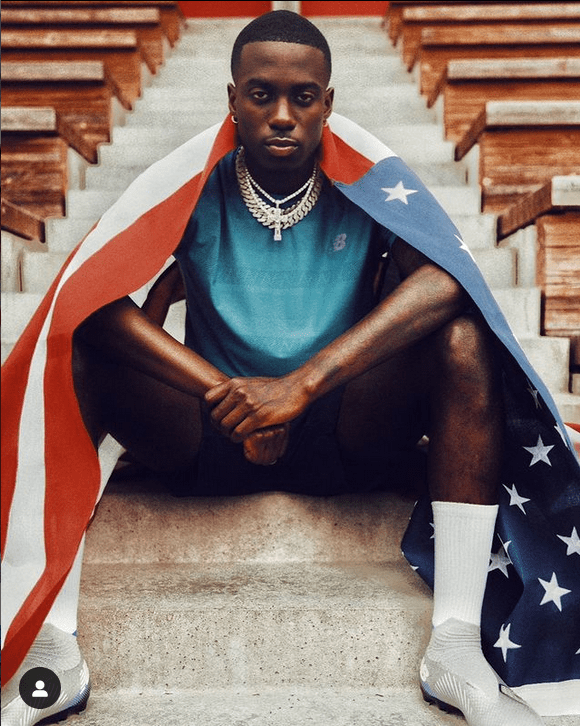



USA! USA! USA!
Need I say more?
 All Sports Scene
Leave a comment